
A New Chapter for VFX Editorial: Meet Chad Sigston
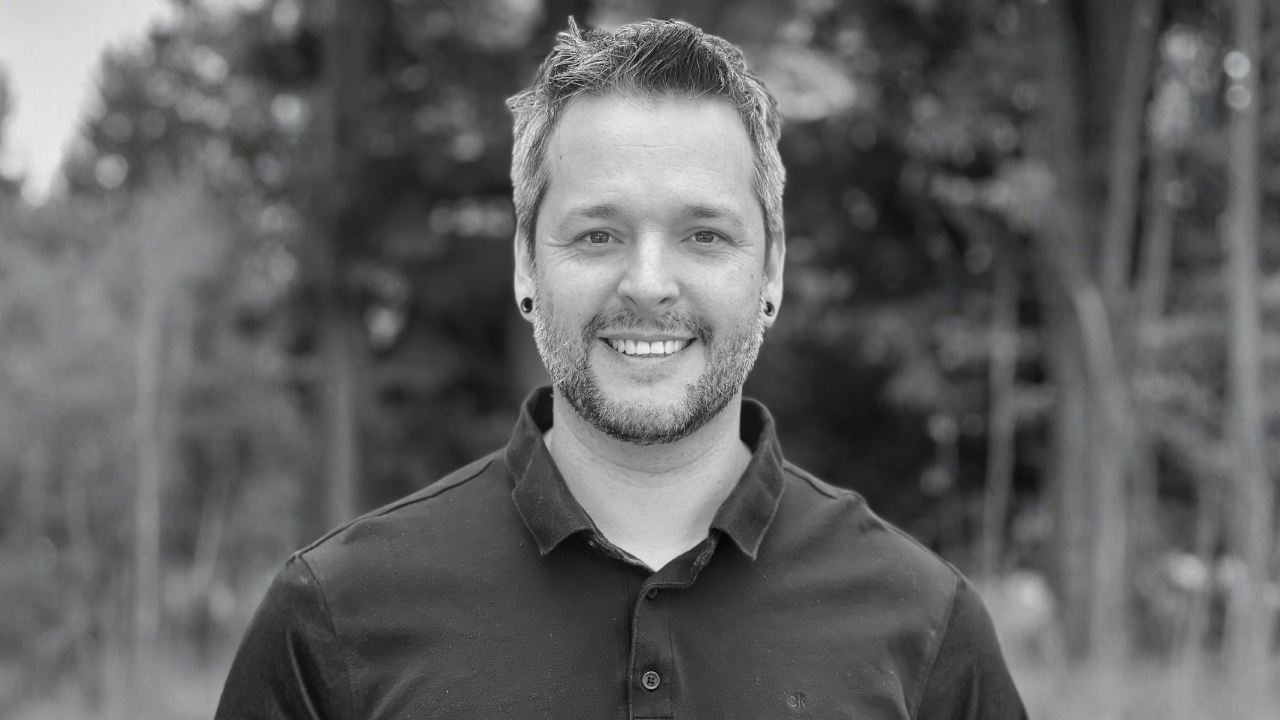
Chad Sigston joins Alkemy X as Head of VFX Editorial, bringing more than 20 years of experience in post-production, visual effects, and editorial leadership across feature films, television, streaming, commercials, music videos, and branded content. Throughout his career, Chad has led editorial teams, developed department workflows and pipeline strategies, managed staffing and delivery, and collaborated closely with creative and production teams on complex productions.
His project experience includes work on films and series such as A Star Is Born, The Jungle Book, The Walking Dead, Cowboy Bebop, One Piece, and Horizon: An American Saga, as well as music videos featuring artists including Taylor Swift, Billie Eilish, Bruno Mars, and Eminem. Across these diverse projects, Chad has developed a passion for building collaborative teams and creating efficient workflows that allow artists and filmmakers to focus on their best work.
At Alkemy X, Chad is focused on helping grow and evolve the studio’s VFX Editorial department through smarter workflows, stronger collaboration, and continuous innovation. In this conversation, he discusses his path into editorial, how VFX workflows have changed, the problem-solving mindset behind great editorial, and how AI and automation could shape the future of post-production.
AX: You’ve spent more than 20 years working across editorial, post-production, and VFX. What initially drew you to editorial, and what has kept you passionate about it?
CS: My path into editorial was actually a bit of a winding road, and really came out of one of the biggest transitions our industry has gone through — the shift from film to digital.
I spent several years working in the film labs at Deluxe, and as the industry moved toward digital acquisition and post-production, it became pretty clear that the traditional film-lab world was going to change dramatically. I knew I wanted to stay in the industry, but I needed to figure out what that next chapter looked like.
I had always loved storytelling, so transitioning into editorial felt like a natural fit. What started as a way to pivot within the industry quickly became something I genuinely loved.
What has kept me passionate about it is that editorial never really stands still. Every project brings a different creative challenge, a different technical problem, or a new workflow to figure out. Even after more than 20 years, there is always something new to learn and another problem to solve.
AX: You’ve worked across feature films, television, streaming, commercials, music videos, and branded content. How does your approach to editorial change across those different formats?
CS: One of the biggest differences between those formats is usually the schedule. How much time do we actually have to get from turnover to final delivery?
That timeline drives a lot of the decisions we make — how the project is structured, how much automation we can build in, how we staff it, and where we need additional checks and balances.
A commercial or music video may move incredibly fast and require decisions almost immediately, while a feature or episodic project can involve thousands of shots, multiple turnovers, changing cuts, and months of deliveries.
The fundamentals are still the same: stay organized, communicate clearly, protect the creative intent, and make sure everyone downstream has what they need. The workflow just has to be flexible enough to fit the project rather than forcing the project to fit the workflow.
AX: What do you think has changed most about VFX editorial since you started in the industry?
CS: The tools, without question. When I first transitioned to the VFX vendor side of the industry, there was very little automation compared with what we have today. Applications didn't necessarily communicate well with one another, and a lot of processes that we can automate now were very manual.
That's changed dramatically. Pipeline development, scripting, automation, and now AI are allowing editorial teams to accomplish much more while eliminating a lot of repetitive technical work.
For me, that's where the real value of these tools is. It's not about removing people from the process; it's about removing unnecessary steps from the process. If we can automate repetitive tasks, reduce human error, and move material through the pipeline faster, the editorial team has more time to focus on the things that actually require experience, judgment, and creative problem-solving.
AX: VFX editorial sits at the intersection of creative and technical workflows. What are some of the biggest challenges teams face in that space, and how can they be solved?
CS: I've always joked that VFX Editors get to play Batman every day. A huge part of the job is detective work. You're investigating turnovers, tracking down missing information, figuring out why something isn't moving through the pipeline correctly, or trying to understand why what you're seeing doesn't match what the client is seeing.
Client turnovers are rarely identical, and every project eventually throws something at you that wasn't in the original plan.
The solution is really a combination of diligence, communication, and attention to detail. You have to understand enough about every part of the pipeline to know where to start looking when something goes wrong.
Great VFX Editors don't just identify problems — they figure out why they happened and, whenever possible, help build a solution so the same problem doesn't happen again.
AX: How do you balance the creative needs of a project with the realities of schedules, budgets, staffing, and delivery?
CS: I think the key is understanding that those things aren't necessarily working against each other. A strong workflow should support the creative while still acknowledging the realities of production.
You start by identifying what absolutely matters creatively and then build the most efficient path around it. Where are the potential bottlenecks? What can we automate? Where do we need experienced people making decisions, and where can the pipeline handle the repetitive work?
Having led editorial teams and managed staffing and workflows across multiple productions, I've learned that throwing more people at a problem isn't always the answer. Sometimes the better solution is improving the process. Ultimately, the goal is to protect the creative work while giving production confidence that we can deliver what we've committed to.
AX: How can better editorial workflows ultimately give artists and filmmakers more creative freedom?
CS: I've always believed Editorial is one of the linchpins of a studio. We're usually among the first people to see the footage come in and the last people to see the finished work go out the door. Everything we do on the front end has an impact somewhere downstream.
When Editorial is organized and the workflow is reliable, Supervisors, Producers, and Artists don't have to spend their time questioning whether they have the correct plate, the right reference, the latest cut, or whether something is going to make delivery. That creates trust.
And once that trust exists between departments, people can spend less time worrying about the mechanics of the pipeline and more time concentrating on the creative work. That's ultimately what a great workflow should do — make the technical side almost invisible so the creative teams can focus on making the work better
AX: You’ve worked on productions ranging from large-scale features to episodic television. What separates a good VFX workflow from a great one?
CS: A good workflow gets the project finished. A great workflow gets the project finished without everyone feeling like they're constantly putting out fires.
With a good workflow, you may still find yourself applying Band-Aids along the way and staying on your toes because you're not completely sure where the next issue is going to come from.
With a great workflow, you trust the pipeline. You know where the material is, you know what happens next, and you know the safeguards are there when something doesn't behave the way it's supposed to.
When you have that level of confidence, the entire team can move incredibly fast. And at the scale of modern feature and episodic VFX, that difference becomes enormous
AX: What do you look for when building and mentoring editorial talent, and what advice do you find yourself giving emerging editors most often?
CS: Open-mindedness is probably at the top of the list. I want people who are sponges for information, who ask questions, and who aren't afraid to admit when they don't know something. Technical skills can be taught. Curiosity and the willingness to keep learning are much harder to teach.
I also look for people who can think on their feet. Every project eventually throws you a curveball, and you have to be able to adjust without losing sight of the bigger picture.
The advice I give most often is to pay attention to the details and understand the "why" behind what you're doing. Don't just learn which button to push — understand what happens before and after you push it.
Great Editors live in the details. They don't stop when they hit a wall; they figure out how to get through it.
AX: What attracted you to Alkemy X, and what made this the right time to join the company?
CS: What attracted me to Alkemy X was really a combination of the people and the opportunity. I wanted my next chapter to be somewhere I could take everything I've learned — from editorial and pipeline development to staffing, mentoring, and running teams across multiple productions — and help build something.
The conversations I had with the leadership at Alkemy X made it clear that there was an opportunity to do exactly that.
There is a lot of experience here, a talented group of artists and producers, and leadership that wants to continue evolving the studio. The timing felt right to come in, contribute to that growth, and help shape what the next version of VFX Editorial at Alkemy X can become.
AX: What excites you most about the opportunity to lead VFX Editorial at Alkemy X, and what are you hoping to build with the team?
CS: What excites me most is that this feels like an opportunity to refresh and rebuild the department while still having a strong foundation underneath it. There are already a lot of great things happening at Alkemy X, from the leadership down to the artists, and that was a big part of why I knew I wanted to be part of this next chapter.
I'm hoping to build an Editorial team that goes beyond simply servicing projects. I want us actively looking for ways to improve how the studio works — developing tools, refining workflows, identifying bottlenecks, and finding ways to streamline communication between departments.
Ultimately, I want to build a team that people trust. When a Supervisor, Producer, Artist, or client comes to Editorial, I want them to know we're going to find a way to get it done.
AX: As the VFX and post-production industries continue to evolve, what changes do you think will have the biggest impact on editorial teams, and what are you most excited about in the future?
CS: The obvious answer right now is AI. There's a lot of uncertainty around it, and understandably it's become a bit of a boogeyman within the industry. But I think it's important to separate AI as a creative replacement from AI as a tool.
From an editorial and pipeline perspective, I'm very interested in the second one. There are so many technical and repetitive processes throughout post-production — organizing media, identifying discrepancies, managing metadata, QC, tracking versions, searching footage, and moving information between systems. If AI and automation can help us handle some of those processes faster and more accurately, that's incredibly valuable.
We've seen this industry reinvent itself before. My own career in Editorial really started because of the transition from film to digital. I look at AI in a similar way. The technology is going to evolve whether we're comfortable with it or not. The opportunity is figuring out how we use it responsibly to make our teams better, remove technical friction, and give talented people more time to do the creative work they're actually here to do.