
Into the Unknown: Rethinking What’s Possible in VFX
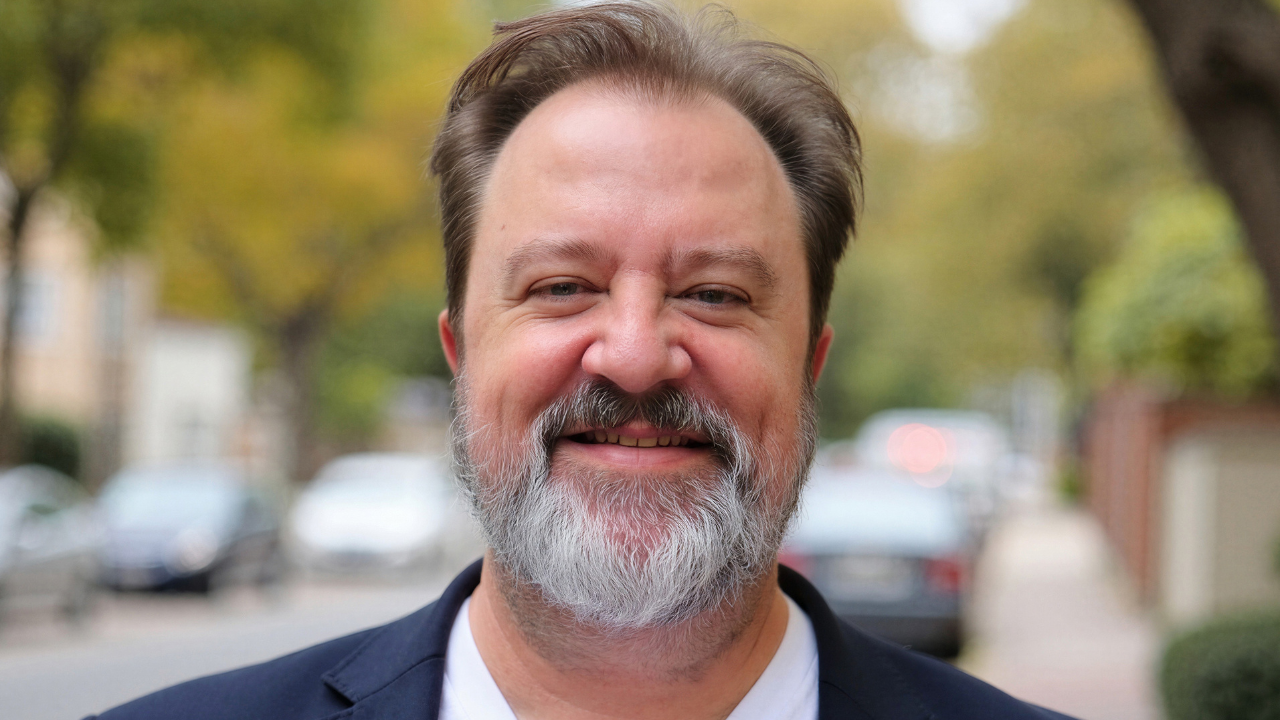
With more than two decades of experience across television and feature film, Senior VFX Supervisor Adam Avitabile brings a rare combination of technical expertise, storytelling instincts, and hands-on experience to Alkemy X. From his unconventional start as a screenwriter-turned-compositor to supervising visual effects on projects including Lost, Fear the Walking Dead, Carnival Row, and Black Swan, Adam has built a career around solving creative challenges and bringing ambitious ideas to the screen.
At Alkemy X, he’s focused on building strong teams, empowering artists, and exploring how emerging technology can push visual effects forward. In this Q&A, Adam shares his journey into VFX, his approach to collaboration and leadership, and what excites him most about the future of the industry.
AX: Welcome to Alkemy X! What drew you to the company, and what excites you most about this next chapter?
AA: I honestly had been looking for a change for quite some time. I had been working for large, corporate-minded companies for the better part of a decade and missed the days working with a like-minded group of creative people whose sole focus was putting the best possible product on the screen. Alkemy X presented an opportunity to get back to my roots, which really excited me.
AX: Can you tell us a bit about your journey into visual effects? Was there a particular project or moment that made you realize this was the career for you?
AA: I had originally gone to school to be a screenwriter, but soon after college, I realized that I needed to get paid somehow eventually. I had always been interested in VFX, but in the late 90’s when I was getting started, it wasn’t really something that was being taught yet. I started taking a few web design classes and eventually met someone who had a fledgling VFX company that took a chance on me. I ended up working for that company for 13 years.
As for projects that inspired me to get into this business, everyone who knows me knows of my obsession with all things Star Wars related. My very first memory was waiting in line to see A New Hope when I was 3 years old. It’s all been downhill since then.
AX: How would you describe your leadership style as a VFX Supervisor?
AA: I try to bring a relaxed attitude to the way I supervise. This business is already stressful enough as it is, and I feel that part of my job is to try and deflect as much of that as I can for the artists. Don’t get me wrong, I’ve had my fair share of work-related stress-outs, but I try to keep them to myself as much as possible. The last thing anyone needs is for someone to pass the stress on to others who are just trying to do their jobs.
AX: You've worked on a wide range of productions throughout your career. Is there a project that challenged or shaped you the most?
AA: There are so many answers to that question. Is it the time I was stuck in monsoon rains shooting Lost and a centipede crawled into my boot? Or was it the time I was asked to figure out how to make two actors inside a porta-potty have a conversation while flying across a field during a hurricane for MacGyver? Who can say.
AX: What do you find most rewarding about supervising visual effects from concept through final delivery?
AA: I like being a part of the production from the beginning. I love looking back at the rough sketches or storyboards and then comparing those to what ended up on the screen. It tells the story of the many victories and inevitable failures that make a project. The creative road to the final product is what has always interested me. It’s never just the work of one individual, and I’m constantly fascinated by all the factors that lead to a project’s fruition.
AX: What qualities do you think separate a great VFX team from a good one?
AA: The confidence to showcase your own creativity is something that not every VFX team has. A lot of times we’re trained to just do exactly what we’re told, but I always feel that if someone has a good idea that maybe the production (or more often myself) didn’t think of, they should be given the runway to try it and see what happens. I was told centuries ago by another supervisor that “It’s not your vision, it’s somebody else’s vision”. This is indeed true, but sometimes someone’s vision can be improved upon if given the chance.
AX: Every project presents new creative and technical challenges. How do you approach problem-solving when obstacles arise?
AA: By surrounding myself with people who are way smarter than me. This is obviously a joke (sort of), but I feel like the best way to tackle things you are uncomfortable with is with a strong team that you trust. I’d much rather dive into something creatively or technically challenging as a group than rely on the “one guy who always saves the day” mentality. I’ve seen that happen too many times, and it always becomes a bottleneck. Throw away your ego and talk it through with your people.
AX: The VFX industry continues to evolve rapidly. What trends or technologies are you most excited about right now?
AA: AI is the hot-button topic right now, and it’s not going away, so you kind of have to embrace it. The question is how you embrace it and to what degree. We’re honestly still figuring that out as we speak, because there’s no clear path on how to properly implement it for every project yet. I think what’s going to be the focus moving forward, for us at least, is to figure out how to use AI not as a one-stop shop for an entire workflow, but rather as a tool to streamline the creation of elements that would then be used in a traditional VFX pipeline. The potential for cost and time savings is too high not to pursue.
AX: How do you balance embracing new technologies with maintaining the artistry that makes visual effects so impactful?
AA: I think this goes back again to AI use. On paper, AI takes away some of the artistry we’re accustomed to due to its very nature. What I never want to do is replace the creative eye of someone else. The trick is to figure out how to use a tool like AI, but keep the participation and creative energies of a team of artists intact. I don’t know, I’ll let you know when I figure it out.
AX: You're joining Alkemy X during an exciting period of growth. What opportunities do you see for the team moving forward?
AA: I see Alkemy X being able to take on bigger and better projects. Projects that really get the team excited and allow us to stretch into areas that have either been out of reach or beyond our capability. That being said, I’ve never been the kind of guy to look down on smaller work. Those kinds of projects that keep your doors open are great opportunities to help elevate the skills of less senior artists. They are an important part of a well-rounded studio, in my opinion.
AX: Collaboration is central to our work. What does successful collaboration look like to you, especially across artists, clients, and production teams?
AA: Talk, talk, and more talk. If you don’t talk about things, then something’s going to get forgotten. A lot of that happens early on in a project when trying to understand the creative vision of the production. Too often things are just assumed, which can lead to problems down the road. You can’t be afraid to speak up early on when trying to understand the big picture. My job is then to disseminate that information to the team and make sure everyone “gets it”.
The phrase, “There are no dumb questions,” is definitely a true statement. Well, there are dumb questions, but part of my job is to field them anyway if that means someone will have a better understanding of what needs to be done. If that’s what someone needs for their process, then all the better.
AX: Outside of the world of visual effects, what are some of your hobbies or interests?
AA: Oh, I’m a geek through and through. I have a vast Star Wars collection/shrine that I’ve been cultivating my entire life. I also have a bunch of 3D printers that I use to make prop replicas and helmets. My first love was music, actually. I’ve been playing the drums in various bands since I was 15 years old.
AX: What are you most excited to accomplish during your first year at Alkemy X?
AA: I think I’m most excited to watch the team grow. It’s only been a couple of months, and I’ve already seen progression. Having the chance to bring in other artists I’ve worked with in the past is always good for my heart. There’s so much uncertainty in our business, so any time I can do my small part to help someone else brings me a lot of joy.
AX: Looking ahead, what inspires you most about the future of visual effects?
AA: I want to see how deep the rabbit hole goes. If you had told me a few years ago that I would be able to type in a prompt and have photoreal imagery delivered to me in mere minutes, I would have had a few choice words for you and thought you were crazy. What lies ahead is equal parts inspiring and terrifying, and I’m definitely here for it!